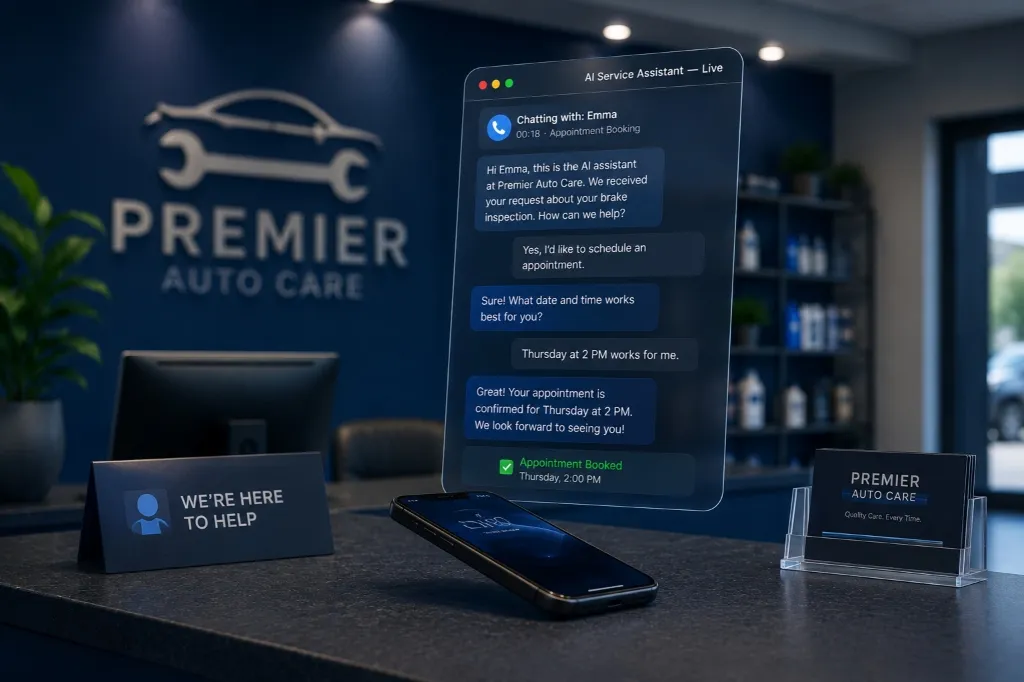
One of the biggest problems businesses face is inconsistent customer follow-up.
Leads go cold.
Customers stop responding.
Appointments get forgotten.
Sales opportunities disappear simply because follow-ups never happen consistently.
Most businesses know follow-ups are important.
The problem is that manual follow-up systems become difficult to manage as operations grow.
This is why customer follow-up automation and AI workflow automation have become essential for modern businesses.
At AZ Konnect, many businesses ask:
The answer is yes.
Modern automation tools and AI systems now allow businesses to automate large portions of customer communication while maintaining consistent engagement and improving customer retention.
In this guide, we’ll explain:
- what customer follow-up automation is
- how automated follow-ups work
- what businesses can automate
- which tools are commonly used
- how AI customer automation improves retention and efficiency
What Is Customer Follow-Up Automation?
Customer follow-up automation refers to using software and AI systems to automatically manage customer communication workflows.
Instead of manually tracking every interaction, automation systems handle repetitive follow-up tasks automatically.
Examples include:
- follow-up emails
- appointment reminders
- onboarding sequences
- lead nurturing
- review requests
- abandoned cart emails
- customer re-engagement
- support follow-ups
The goal is to improve consistency while reducing manual operational workload.
Because apparently humans enjoy manually sending the same reminder email 400 times until technology politely intervenes and asks everyone to stop suffering unnecessarily.
Why Businesses Struggle With Manual Follow-Ups
Without automation, businesses often experience:
- inconsistent communication
- forgotten leads
- delayed responses
- poor customer retention
- missed sales opportunities
- operational overload
As customer volume increases, manual systems become harder to maintain.
This creates communication gaps that directly impact revenue and customer experience.
Can AI Automate Customer Communication?
Yes.
AI customer automation has become one of the fastest-growing areas in modern business operations.
Using AI systems powered by OpenAI and workflow automation platforms, businesses can automate:
- customer responses
- follow-up emails
- support inquiries
- appointment reminders
- onboarding communication
- lead qualification
- customer retention workflows
AI systems help businesses maintain faster and more consistent communication without requiring additional staff for repetitive tasks.
What Tools Automate Customer Follow-Ups?
Several automation platforms are commonly used for customer follow-up systems.
HubSpot
HubSpot is widely used for:
- CRM automation
- lead tracking
- follow-up workflows
- email automation
- sales pipelines
- customer communication systems
Businesses often use HubSpot to automate lead nurturing and customer engagement.
Mailchimp
Mailchimp is commonly used for:
- email marketing automation
- onboarding sequences
- promotional campaigns
- customer retention emails
- automated follow-ups
It’s especially useful for small businesses wanting beginner-friendly automation systems.
ActiveCampaign
ActiveCampaign combines:
- CRM automation
- customer journeys
- behavioral automation
- email sequences
- sales follow-up systems
It’s heavily focused on customer lifecycle automation.
Zapier
Zapier connects apps together and automates workflows without coding.
For example:
- when someone books a Calendly call
- update HubSpot
- notify the sales team in Slack
- send a follow-up email
- log customer activity in Google Sheets
All automatically.
Make.com
Make.com supports more advanced workflow automation and multi-step customer systems.
Businesses use it for:
- complex automation workflows
- AI integrations
- customer journey automation
- operational scaling
How Do Automated Customer Follow-Ups Work?
Customer follow-up automation works by triggering actions automatically based on customer behavior.
For example:
When a customer:
- fills out a form
- books a consultation
- abandons a cart
- completes a purchase
- visits a landing page
- requests information
The system can automatically:
- send emails
- schedule reminders
- notify teams
- trigger CRM workflows
- send offers
- request reviews
- start onboarding sequences
This creates faster and more consistent customer engagement.
What Customer Follow-Ups Can Businesses Automate?
Many business workflows can now be automated.
Lead Follow-Ups
Businesses automate:
- inquiry responses
- consultation reminders
- nurture sequences
- sales emails
- follow-up scheduling
Appointment Reminders
Calendly and CRM systems automate:
- booking confirmations
- reminder emails
- rescheduling workflows
- follow-up communication
This reduces missed appointments significantly.
Customer Retention Campaigns
Businesses automate:
- loyalty campaigns
- customer check-ins
- special offers
- renewal reminders
- re-engagement emails
Review & Feedback Requests
Automation systems can request:
- Google reviews
- testimonials
- customer feedback
- post-service surveys
This helps improve reputation management and trust.
Customer Support Follow-Ups
AI systems can automate:
- support ticket updates
- onboarding assistance
- FAQs
- customer guidance
- support reminders
How Does Follow-Up Automation Improve Customer Retention?
Customer retention improves because automation creates:
- faster communication
- consistent engagement
- better customer experiences
- fewer missed interactions
- stronger relationship management
Businesses that follow up consistently often retain customers more effectively than businesses with inconsistent communication systems.
Customers expect quick responses today.
Slow communication creates friction and lost opportunities.
What Is AI Workflow Automation?
AI workflow automation combines automation systems with artificial intelligence.
Instead of automating only repetitive actions, AI systems can:
- understand customer intent
- generate responses
- personalize communication
- summarize conversations
- prioritize customer interactions
- improve support systems
OpenAI-powered workflows are increasingly being used to create smarter customer communication systems.
Which means software is slowly becoming the employee that never forgets to follow up, never loses sticky notes, and never disappears for “just a quick lunch” for two hours. Remarkable evolution of office survival mechanisms.
Signs Your Business Needs Follow-Up Automation
Your business likely needs automation if:
- leads stop responding frequently
- follow-ups are inconsistent
- appointments are missed
- customer communication feels disorganized
- response times are slow
- teams are overwhelmed with repetitive communication
- retention rates are weak
These are strong indicators that customer workflow systems need optimization.
Can Small Businesses Use Follow-Up Automation?
Absolutely.
Small businesses often benefit the most because automation helps:
- save time
- reduce staffing pressure
- improve organization
- increase customer retention
- maintain consistent communication
Even simple automation systems can dramatically improve operational efficiency.
Businesses do not need enterprise-level infrastructure to begin automating customer workflows.
Final Thoughts
Customer follow-up automation is no longer optional for businesses trying to scale efficiently while maintaining strong customer relationships.
Modern CRM systems, AI workflow automation tools, and no-code platforms now allow businesses to automate customer communication far more effectively than ever before.
Platforms like HubSpot, Mailchimp, Zapier, Make.com, OpenAI, Salesforce, ActiveCampaign, and Calendly have made customer retention automation highly accessible for businesses of all sizes.
Businesses that automate follow-ups effectively often:
- improve retention
- increase conversions
- strengthen customer experience
- reduce operational workload
- improve long-term scalability
At AZ Konnect, we help businesses build scalable AI-powered customer automation systems that improve communication, increase retention, and reduce repetitive operational work.