Many businesses know they need a mobile app.
Far fewer understand what happens between:
To most people, app development feels mysterious. A developer types aggressively into a dark screen for several months, coffee disappears at alarming speeds, and eventually an app exists.
Reality is slightly more organized than that. Slightly.
A professional mobile app development company handles far more than coding.
Modern app agencies help businesses with:
- strategy
- UI/UX design
- frontend development
- backend systems
- cloud infrastructure
- AI integrations
- testing
- deployment
- optimization
- long-term scaling
In this guide, we’ll explain:
- what app development companies actually do
- the services agencies provide
- how the development process works
- what technologies are commonly used
- how businesses scale mobile apps successfully
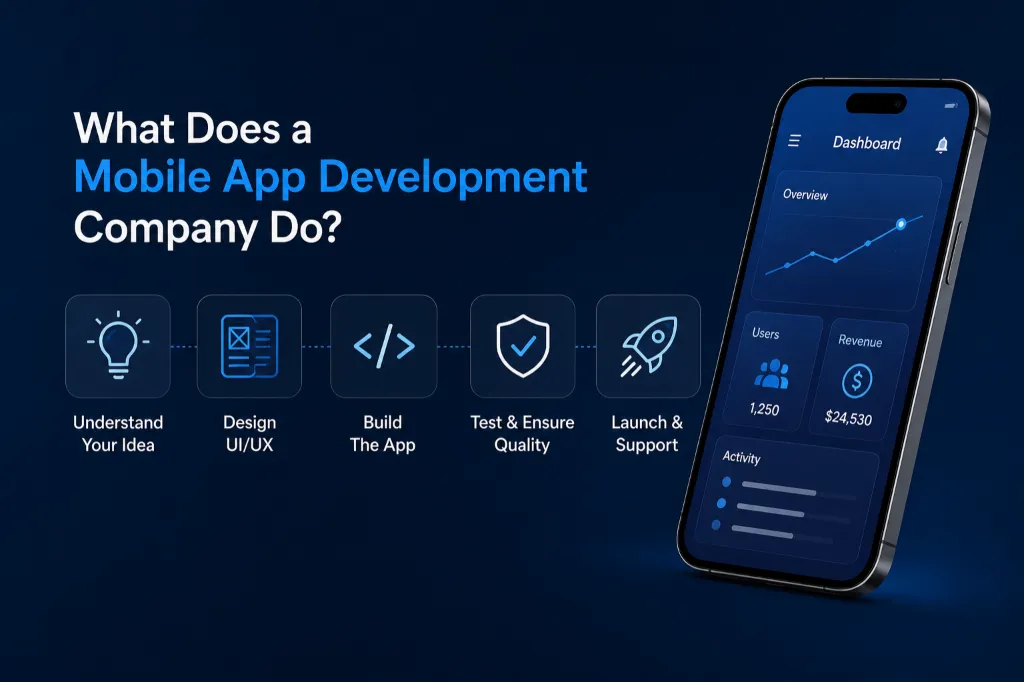
What Does a Mobile App Development Company Do?
A mobile app development company helps businesses:
- plan
- design
- build
- launch
- optimize
- scale
mobile applications.
Most agencies provide both:
- technical development
- strategic consulting
The goal is not simply building an app.
The goal is building:
- a scalable product
- strong user experience
- stable infrastructure
- business growth systems
What Services Do App Development Agencies Offer?
Most modern app development companies provide several core services.
1. App Strategy & Product Planning
Before development begins, agencies help businesses define:
- app goals
- target audience
- feature priorities
- monetization strategy
- technical requirements
- scalability planning
This phase helps businesses avoid:
- unnecessary features
- technical confusion
- expensive rebuilds later
Good planning dramatically reduces long-term development problems.
Why Strategy Matters Before Development
Many businesses rush into coding immediately.
This usually creates:
- budget overruns
- delayed launches
- confusing UX
- technical debt
- scalability problems
Professional agencies help businesses prioritize:
- MVP features
- customer needs
- operational efficiency
- long-term product growth
Human beings consistently underestimate how complicated software becomes once real users arrive. It’s almost inspirational.
2. UI/UX Design Services
A major responsibility of app development companies is designing:
- user experience
- interface layouts
- mobile interactions
- navigation systems
- visual branding
This process is called: UI/UX design.
What Happens During UI/UX Design?
Design teams create:
- wireframes
- prototypes
- screen layouts
- interaction systems
- mobile responsiveness
- user flow architecture
Professional agencies commonly use:
- Figma
- design systems
- UX testing tools
Strong UX design improves:
- retention
- conversions
- customer satisfaction
- app engagement
Poor UX destroys apps surprisingly fast regardless of how strong the backend is.
3. Frontend App Development
Frontend development handles:
- what users see
- app screens
- navigation
- interactions
- animations
- responsiveness
Modern agencies commonly build frontend systems using:
- React Native
- Flutter
- Swift
- Kotlin
Why React Native and Flutter Are Popular
React Native and Flutter support:
- cross-platform app development
- faster deployment
- lower development costs
- scalable app infrastructure
This allows businesses to launch:
- iOS apps
- Android apps
from a single codebase.
This is especially valuable for:
- startups
- growing businesses
- MVP products
When Native App Development Is Used
Some companies use:
- Swift for iOS
- Kotlin for Android
when apps require:
- advanced hardware integration
- maximum performance
- enterprise-level scalability
- complex native functionality
Native development often costs more but provides deeper platform optimization.
4. Backend Development & Infrastructure
Most businesses focus on app screens.
But backend systems power:
- databases
- APIs
- authentication
- notifications
- cloud storage
- analytics
- payments
- AI functionality
Backend development is one of the most critical parts of scalable app architecture.
What Technologies Do Backend Systems Use?
Modern app agencies commonly use:
- Firebase
- AWS
- Node.js
- cloud APIs
- scalable server infrastructure
Strong backend systems ensure apps remain:
- stable
- secure
- scalable
- fast
as user growth increases.
5. AI App Development & Automation
Modern businesses increasingly request:
- AI assistants
- automation workflows
- chat systems
- recommendation engines
- AI customer support
Many agencies now integrate:
- OpenAI APIs
- AI automation systems
- machine learning workflows
AI-powered apps require:
- additional infrastructure
- scalable cloud systems
- performance optimization
AI development is now becoming a major part of modern mobile applications.
Because apparently humanity decided regular software wasn’t complicated enough.
6. Payment System Integration
Many apps require:
- subscriptions
- e-commerce functionality
- service payments
- memberships
App development companies commonly integrate:
- Stripe
- payment APIs
- subscription systems
This allows businesses to securely process:
- payments
- recurring billing
- digital transactions
7. App Testing & QA
Professional app agencies always provide:
- quality assurance testing
- bug fixing
- performance testing
- security testing
- device compatibility testing
Apps must function properly across:
- phones
- tablets
- operating systems
- network conditions
- screen sizes
Strong QA dramatically improves:
- stability
- customer experience
- app store performance
8. App Store Deployment
Once development is complete, agencies help businesses launch apps on:
- Apple App Store
- Google Play Store
This process includes:
- app submission
- metadata optimization
- screenshots
- compliance review
- performance monitoring
Deployment requires careful technical preparation.
9. Ongoing Maintenance & Scaling
App development does not end after launch.
Most agencies provide:
- maintenance
- updates
- feature expansion
- infrastructure scaling
- security updates
- performance optimization
Apps are living digital systems that evolve continuously.
Businesses that ignore maintenance often create:
- security issues
- instability
- poor user experience
- scalability failures
Do App Development Companies Work With Startups?
Yes.
Many agencies specialize in:
- startup MVPs
- SaaS platforms
- AI startups
- scalable business applications
Startups commonly use agencies because they provide:
- strategic guidance
- development teams
- design systems
- technical infrastructure
without hiring large internal engineering teams immediately.
What Makes a Good App Development Agency?
Strong app development companies usually provide:
- transparent communication
- scalability planning
- strategic guidance
- strong UI/UX
- reliable infrastructure
- ongoing support
Businesses should evaluate:
- portfolio quality
- technical expertise
- communication systems
- scalability experience
- long-term support structure
not just pricing alone.
What Mistakes Should Businesses Avoid?
Common mistakes include:
- hiring based only on price
- skipping MVP strategy
- ignoring scalability
- poor UX planning
- rushing development
- unclear project goals
Strong app development requires:
- planning
- testing
- optimization
- structured execution
not rushed coding chaos held together emotionally by deadlines.
Final Thoughts
A mobile app development company does far more than simply write code.
Professional agencies help businesses:
- plan products
- design experiences
- build scalable systems
- integrate AI
- optimize performance
- launch applications
- scale long-term growth
Modern app development involves technologies like:
- React Native
- Flutter
- Swift
- Kotlin
- Firebase
- AWS
- OpenAI
- GitHub
- Figma
- Stripe
Businesses that work with experienced app development partners usually:
- reduce technical risk
- launch faster
- improve scalability
- create better customer experiences
- build stronger digital products
At AZ Konnect, we help businesses build scalable mobile apps, AI systems, automation platforms, and modern digital infrastructure designed for long-term growth.